
Water Damage Restoration in Littleton, CO
Water damage restoration in Littleton, CO means pulling out standing water, drying the building materials, and cleaning every surface the water reached, before lingering moisture turns a repair into a rebuild. Homes and businesses across Littleton, Colorado call us for frozen and split pipes, flooded basements, sewage backups, roof leaks, and storm or snowmelt water. For emergency water damage, tell us where the water is and what is happening, and you will hear what to do right away and what the job involves.
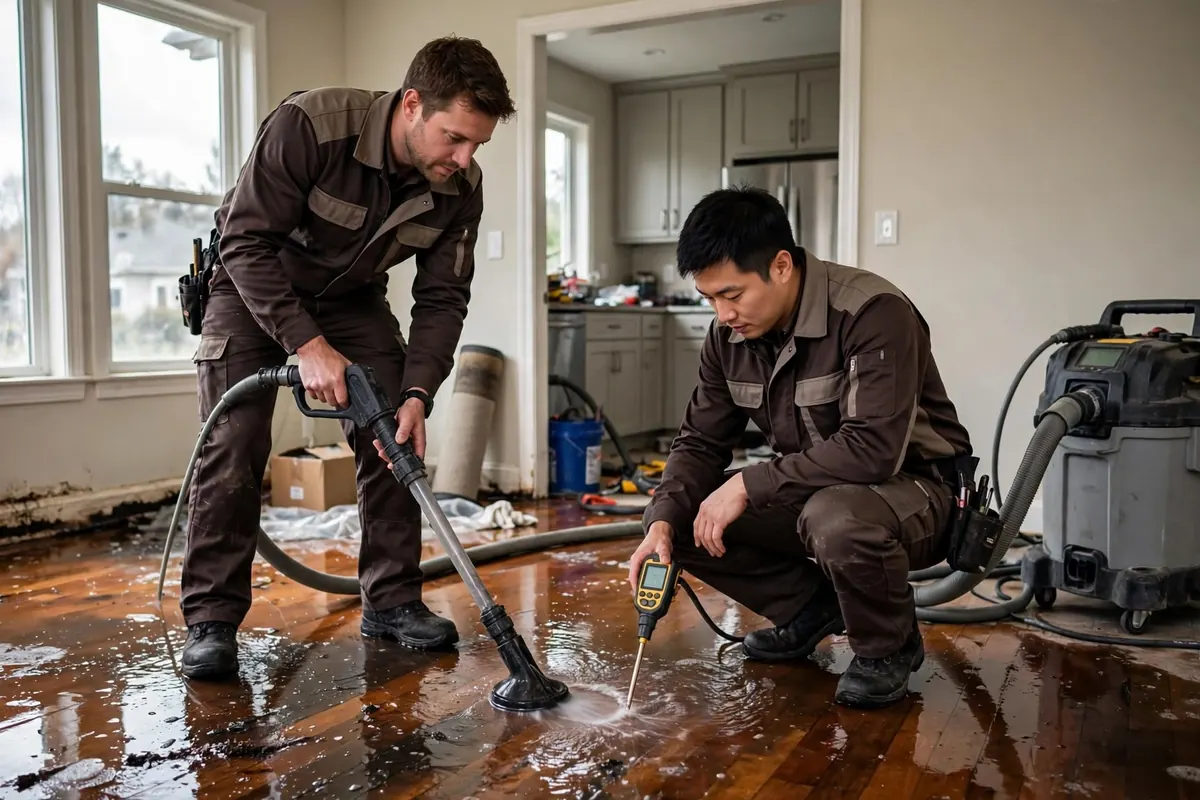
Water Damage Restoration Services in Littleton
Where the water came from decides what the repair looks like. In Littleton, the usual causes are burst and frozen pipes, snowmelt and heavy rain, sump pump failure, water heater and roof leaks, and sewer backups, and each one calls for a different fix.
Water Is Pouring In and You Need Help Now
A burst line or a failed fitting can flood a room in minutes. Emergency water damage response starts by stopping the spread, then removing the water and beginning to dry.
Pooled Water on Floors and Soaked Carpet
Water left on a floor keeps soaking into carpet, padding, and subfloor. Water extraction and removal pumps the standing water out first, so the damage stops spreading.
Water Damage Left Behind After a Leak or Spill
Even a small leak can leave wet drywall, damp insulation, and stained flooring. Water damage cleanup removes what the water soaked and cleans the area so it can dry properly.
Walls and Floors Still Damp After Cleanup
A wall can look dry while the framing behind it stays wet. Structural drying and dehumidification pulls moisture out of drywall, framing, and subfloors until readings show it is dry.
Basement Flooded After Rain or Snowmelt
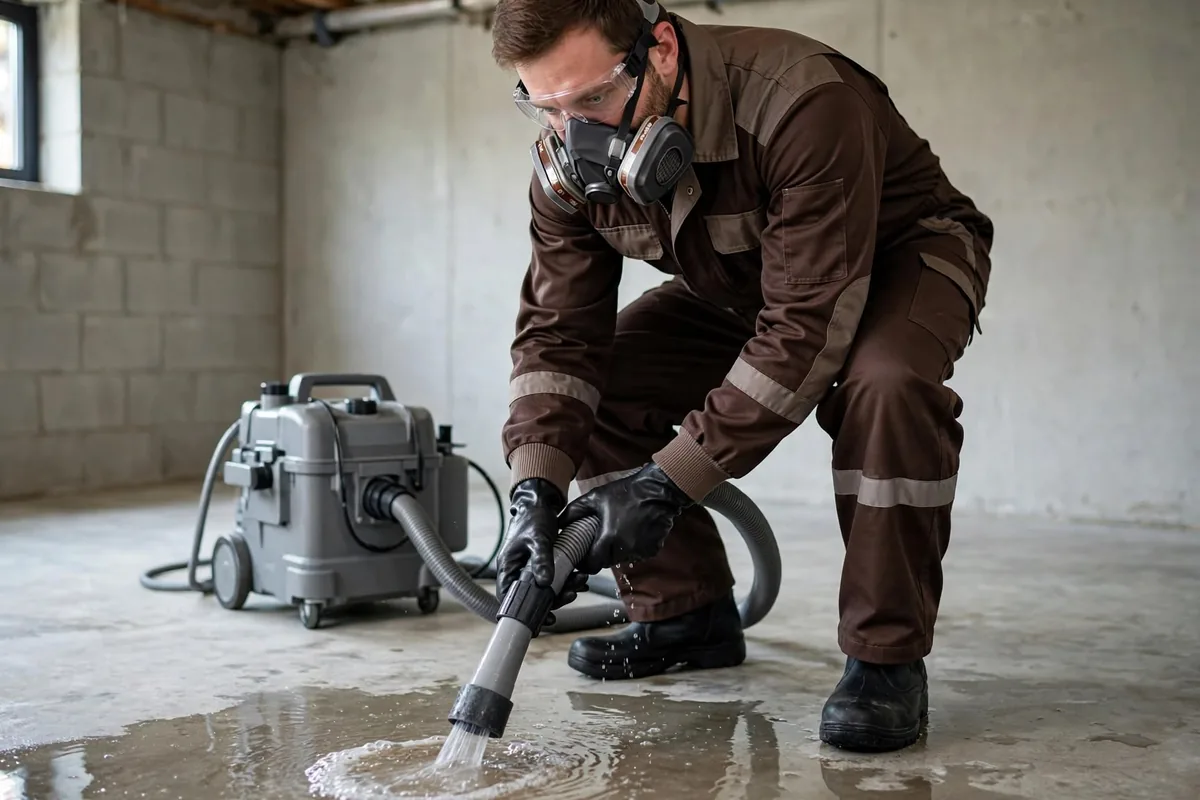
Rain, snowmelt, and a sump pump that stops working can all put water in a basement. Basement water damage service takes out the water, dries the room, and cleans what the flood touched.
Sewage Coming Up Through a Drain or Toilet
Sewage is black water, which carries bacteria, so it needs different handling than a clean leak. Sewage cleanup removes the waste, sanitizes the affected surfaces, and clears the odor.
A Pipe Burst, or Froze and Thawed
Pipes that freeze often do not leak until they thaw. Burst pipe water damage service clears the water out and dries the walls, ceilings, and floors that took the hit.
A Water Heater Leaked or Failed
A failed tank can empty its contents into a utility room or basement, soaking walls, flooring, and stored items. Water heater leak cleanup extracts the water and dries everything around the tank.
Rain or Snow Coming Through the Roof
A roof leak sends water into attic insulation, ceilings, and walls, often far from the opening. Roof leak water damage service dries what the water soaked, while the roof itself needs a roofer.
Water Damage in a Shop, Office, or Rental Property
A leak in a shop, office, or rental can reach several rooms, floors, or tenants at once. Commercial water damage service pulls out the water, dries the building, and cleans the areas it reached.
Mold Growing After Water Damage
Materials that stay wet can start to grow mold. Mold remediation deals with growth that has already developed, and thorough drying helps keep it from developing in the first place.
A Storm or Flash Flood Soaked the Property
Floodwater brings mud, silt, and contaminants into a building. Flood damage restoration clears out the water and debris, dries the structure, and cleans the surfaces the floodwater covered.
Damp Spots or Stains With No Clear Source
A stain, a musty smell, or a rising water bill can point to a hidden leak. Water leak detection looks for the source with moisture readings and a close check of the area.
What to Do First When Water Gets Into Your Property
If you are wondering what to do after water damage in your house or business, take these four steps in order:
Stop the source
When it is safe to do so, shut the valve at the affected fixture or at the main water shutoff.
Protect yourself
Stay clear of wet outlets and appliances, and of any water that may carry sewage or floodwater contamination.
Document the damage
Take photos and notes before anything is moved, since they support an insurance claim.
Get help early
The longer water sits, the deeper it soaks into walls, floors, and insulation.
A Four-Step Water Damage Restoration Process
Water damage restoration follows a set order: find the water, remove it, dry the structure, and clean. In Littleton, CO, water mitigation is the opening stage that stops further damage, and what follows is shaped by the water source, the water type, and the materials soaked.
Assess the Damage
We find the source, map every wet room and material, and look for hidden moisture. The water type, whether clean, gray, or black, shapes the plan from this point on.
Remove the Water
Standing water and saturated materials are extracted first, so moisture stops spreading into dry areas.
Dry the Structure
Airflow and humidity control draw moisture out of walls, floors, and subfloors, with readings taken until the materials are confirmed dry.
Clean and Sanitize
Surfaces the water touched are cleaned and sanitized, with added precautions when the water is contaminated, as with sewage or floodwater.
What Happens If You Wait to Call
Every hour changes how much of a property can be saved. Here is how water damage usually unfolds when it is left alone, and why early action matters.
The First Hours: Water Is Still Contained
Right after a leak, water is usually limited to the floor or the area around the source. This is when extraction is simplest and the most materials can still be dried.
Within a Day: Moisture Reaches Walls and Subfloors
Water wicks upward into drywall and sinks into carpet padding and subfloors, where it is out of sight. Drying now takes more time and more work.
Within 24 to 48 Hours: Mold Can Begin to Grow
EPA guidance (opens in a new tab) advises drying wet materials within 24 to 48 hours, because mold can begin to grow in that window, although it does not always appear.
Days Later: Drying Turns Into Replacing
Materials that sat wet for days, such as soaked padding and soft drywall, often cannot be saved and have to be replaced, which means more cost, more time, and more disruption than drying would have.
What Affects the Cost of Water Damage Restoration
Every water damage job is different, so there is no single price. Cost depends on the size of the wet area, the water type, the time it has been wet, the materials involved, and access to wet walls and floors. Contaminated water and a longer wait both add steps. Prices are not listed on this page, since the property has to be assessed first. If you expect to file a claim, keep your photos, notes, and receipts, since your homeowners or business policy determines what is covered.
Water Damage in Littleton: What Local Property Owners Should Know
Water damage in Littleton, CO usually traces back to three things: rain and snowmelt, freezing weather, and sewer problems.
Rain, Snowmelt, and the South Platte River
The South Platte River runs along the western edge of the City of Littleton, and the creeks that feed it, including Big Dry Creek, Little's Creek, and Slaughterhouse Gulch, flow in steep, narrow channels. The city's flood insurance study (opens in a new tab) notes that floods of record on the South Platte came from snowmelt and heavy rain, and that once sewer capacity is exceeded, floodwater can travel along streets and across private property.
Freezing Weather and Burst Pipes
Cold snaps across the Denver area can freeze pipes, and the damage often shows once the ice thaws.
Sewer Backups and Who Owns the Line
In the City of Littleton, the sewer service line that connects a home to the main is owned and maintained by the property owner, and city utility staff cannot clear a blockage inside it, as the city explains in its sewer backup guide (opens in a new tab). Denver Water supplies the city, and South Platte Renew treats its wastewater. Depending on your address, your sewer may be run by the city or by a local sanitation district, and sewer backup coverage is typically a separate add-on to an insurance policy.
Areas We Serve in Littleton, CO and Nearby Neighborhoods
We provide residential and commercial water damage restoration across Littleton, Colorado and nearby neighborhoods, including these areas:
- Downtown Littleton
- Centennial
- Goddard
- Heritage
- Ketring Park
- Progress Park
- South Littleton
- Southwest Littleton
- Sterne Park
- Trailmark
Our service area covers these ZIP codes:
- Littleton, CO 80120
- Littleton, CO 80121
- Littleton, CO 80122
- Littleton, CO 80123
- Littleton, CO 80125
- Littleton, CO 80126
- Littleton, CO 80127
- Littleton, CO 80128
- Littleton, CO 80129
- Littleton, CO 80130
Littleton, CO 80125
Wondering whether your address is covered? Share your street and ZIP code when you reach out, and we will confirm.
Why Littleton Property Owners Call Us
A first call to a restoration company usually comes in the middle of a crisis, so we keep that first conversation short and clear. We ask where the water is, what caused it, and whether it has stopped, then lay out the next step in plain terms. Working as a water damage company in Littleton, CO, we say clearly which services we provide, so nothing in the plan is a surprise. Working as a water restoration company in this area, we also give straight answers about what is wet and what to document for your insurance company.

Get Help With Water Damage in Littleton Today
Reach Us Now
For emergency help with water damage in Littleton, CO, reach out now and describe what you are seeing. If your property flooded and you do not know who to call in Littleton, CO, start here.
What to Tell Us When You Call
Tell us where the water is, what caused it, whether the source is stopped, how long it has been there, whether sewage is a possibility, and whether the property is a home or a business. A few photos of the wet areas help, provided you can take them without risk.
Prefer to Write? Send Us a Message
Email your name, phone number, the address of the damage, and a few lines about what happened to contact@waterdamagerestorationlittleton.us, and we will reply with the next steps.