
Structural Drying and Dehumidification in Littleton, CO
Structural drying in Littleton, CO is the process of pulling moisture out of the parts of a building that stay wet even after the pooled water is gone, including drywall, framing, and subfloors, using air movers, dehumidifiers, and moisture readings. A surface can feel dry while the material underneath is still wet, and that hidden moisture is what leads to swelling, odors, and mold. This page explains what the service includes, how drying is confirmed, and when it is needed.
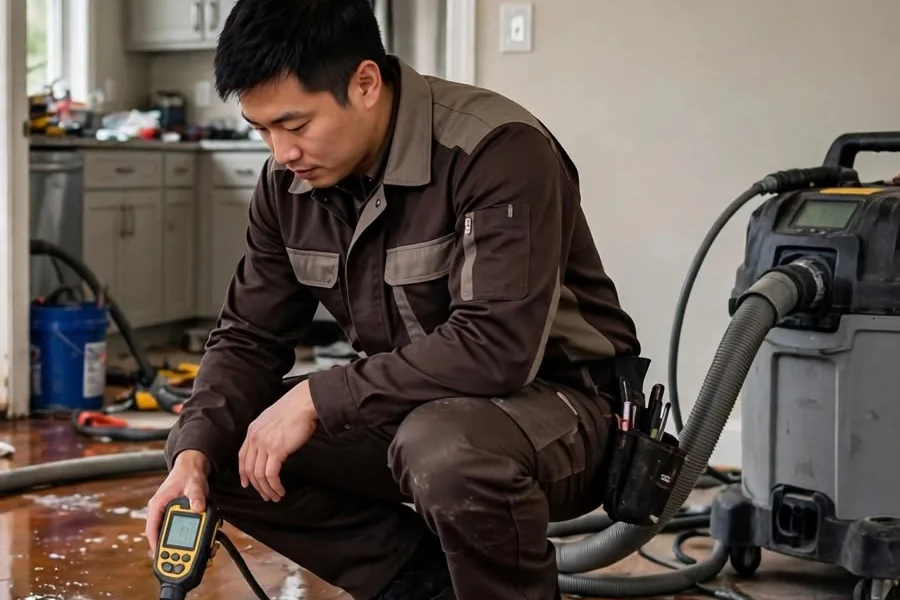
What Structural Drying and Dehumidification Includes
Structural drying and dehumidification in Littleton, CO is a planned process, not a fan left running in a room. The plan is built around what is wet, how the space is laid out, and which materials are involved. A typical job includes:
- Mapping where moisture is, with readings taken in walls, floors, and ceilings
- Placing air movers to push air across wet surfaces
- Running dehumidifiers to pull moisture out of the air
- Opening or accessing wet wall cavities and floors where needed
- Taking readings over the course of the job and adjusting equipment
- Confirming that materials are dry before equipment is removed
- Keeping a record of the readings from start to finish
Why Looks Dry Is Not the Same as Dry
Moisture Soaks Deep Into Materials
Drywall, framing, and subfloors absorb water well below the surface, so a wall that feels dry to the touch can still be wet inside.
It Travels and Hides
Water rarely stays put. It creeps into wall cavities, beneath flooring, and into the space above ceilings. The EPA (opens in a new tab) notes that hidden leaks can cause wet spots on walls and lead to mold behind them.
Damage Builds Quietly
Materials that stay wet can swell, warp, stain, and weaken long before anything looks wrong from the surface.
Mold Needs Only Moisture
Mold cannot grow without moisture, which is why the EPA's guideline is to dry wet materials within 24 to 48 hours. If growth has already started, mold remediation deals with it, and drying keeps it from returning.
How Structural Drying Works
Map the Moisture
We take readings to find every wet area, including the ones that look dry, and record them so progress can be measured.
Set Air Movers and Dehumidifiers
Equipment is placed to move air across wet surfaces and remove the moisture that air picks up, with the layout based on what is wet and how the space is shaped.
Monitor and Adjust
Readings are taken again as the materials dry, and equipment is moved or changed where drying is slower than expected.
Confirm the Structure Is Dry
Drying is finished when readings show the materials have reached normal levels, not when the surface feels dry to the touch.
How Air Movers and Dehumidifiers Work Together
Air movers and dehumidifiers do different jobs, and drying works best when they run together. Air movers keep air flowing over wet surfaces, which helps the water in them evaporate. Dehumidifiers then collect that moisture from the air, which lets the air keep taking up more. Without the dehumidifier, the moisture would simply move into the air and settle on other surfaces. The EPA advises using a dehumidifier when a room such as a basement is too humid.
How We Know the Structure Is Actually Dry
Moisture Mapping
The first readings show where the water is. Later readings show whether it is leaving, and where it is not.
Comparing Against Dry Materials
Readings from wet materials are compared with readings from similar materials that were never wet, which shows what dry looks like in that building.
Checking the Air
Indoor humidity matters too. The EPA recommends keeping relative humidity below 60 percent, ideally between 30 and 50 percent, and Weld County's moisture control guidance (opens in a new tab) repeats that range for Colorado homes.
Keeping a Record
The readings from the first day and the last day give a written record of how the job progressed, which can support an insurance claim.
What Materials Need Structural Drying
Structural drying focuses on materials that hold water and are hard to see into:
- Drywall and the wall cavities behind it
- Framing, including studs and wall plates
- Subfloors beneath carpet, tile, and wood
- Hardwood and laminate flooring
- Cabinet bases, baseboards, and trim
Materials that cannot be dried and cleaned, such as wet insulation, are usually removed, since Weld County's guidance says to consider removing and replacing materials that cannot be cleaned and dried.
Where Structural Drying Fits After Water Damage
Drying is one step in a sequence. Water extraction and removal comes first, because there is no point drying a structure that still holds standing water. Water damage cleanup sorts out what can be saved and sanitizes what the water touched. Drying then removes the moisture that remains in what is staying. Skipping or shortening drying is where hidden damage and mold usually begin.
When Structural Drying Is Needed
Structural drying is needed whenever water has soaked into a building, and these signs point to it:
- Walls or floors that feel cool, damp, or clammy once the water is gone
- A stale, earthy odor in a room that got wet
- Baseboards, trim, or cabinet bases that are swelling
- Peeling paint, bubbling wallpaper, or stains that keep spreading
- Hardwood floors that cup or buckle
- Condensation on windows after a leak, which the EPA says can signal high indoor humidity
Where We Dry Structures in Littleton Properties
Basements
A basement slab, framing, and finished walls can stay damp long after the standing water is gone, so drying is a major part of any basement water damage job.
Kitchen and Bath Leaks
Leaks behind cabinets and under fixtures wet subfloors and wall bases that cannot be seen from the room.
Upper Floors and Ceilings
Water from a roof or an upstairs leak can leave ceiling cavities and wall tops wet while the room below looks normal.
Commercial Spaces and Rental Units
In a commercial building, drying has to cover larger areas and shared walls, so planning the equipment layout matters more.
What Not to Do While Drying Is Under Way
A few well-meant steps can lock moisture in:
- Do not paint, seal, or cover wet materials. The EPA says not to paint over wet walls, and Weld County's guidance says not to enclose, seal, or paint materials that are wet.
- Do not judge dryness by touch. A surface can feel dry while the material behind it still holds water.
- Do not apply strong heat to hardwood floors. The EPA cautions against strong heat on hardwood floors.
- Do not switch off equipment early. Stopping before readings return to normal leaves moisture behind.
- Do not close up walls or lay new flooring before readings confirm the materials are dry.
Signs Drying Is Not Finished
If any of these appear after equipment is removed, moisture may still be inside the structure: an odor that comes back, baseboards or flooring that keep swelling or cupping, paint that bubbles, stains that grow, or condensation on windows and walls. In that case, readings should be taken again before anything is repaired or covered.
What Affects How Long Structural Drying Takes
Drying has no fixed schedule. It varies with how much water the materials absorbed, the number of rooms involved, the materials themselves, how long they sat wet, and the temperature and humidity inside. Thick or dense materials such as framing dry more slowly than thin ones. No prices or timelines appear here, because both come from an assessment.
Drying in Changing Colorado Weather
Outdoor conditions in Littleton change with the seasons, and the right drying approach changes with them. EPA guidance, as summarized by Rensselaer Polytechnic Institute (opens in a new tab), says to increase ventilation when outside air is cold and dry and to dehumidify when it is warm and humid. A drying plan therefore does not assume that opening windows will always help.
Structural Drying Service Areas in Littleton, CO
Structural drying and dehumidification are offered in these areas of Littleton, Colorado:
- Downtown Littleton
- Ketring Park
- Progress Park
- Heritage
- Southwest Littleton
Coverage includes ZIP codes 80126 and 80130, plus the ones that border them in Littleton. If you are not sure about your street, send it along and we will confirm.
Get Help Drying Out Your Property
Describe the Water Damage
Tell us where the water was, how long ago it happened, and which rooms and materials got wet. We will explain what drying involves for your property.
Details That Help Us Plan the Drying
Helpful details: whether the standing water has been removed, what the walls and floors are made of, which areas still feel damp, and whether it is a home or a commercial property. Send photos only if you can take them safely.
Reach Us by Email
Email contact@waterdamagerestorationlittleton.us with your name, phone number, the address, and a short description of the water damage, and the next steps will come back to you.