
Flood Damage Restoration in Littleton, CO
In Littleton, CO, flood damage restoration means clearing floodwater, mud, and silt out of a building, then drying the structure and cleaning and sanitizing what the water touched. Because floodwater is treated as contaminated, the work needs protective gear and careful handling that a clean leak does not. Below: the first steps after a flood, how the cleanup is done, and what to know about Littleton's flood risk, floodplain rules, and flood insurance.
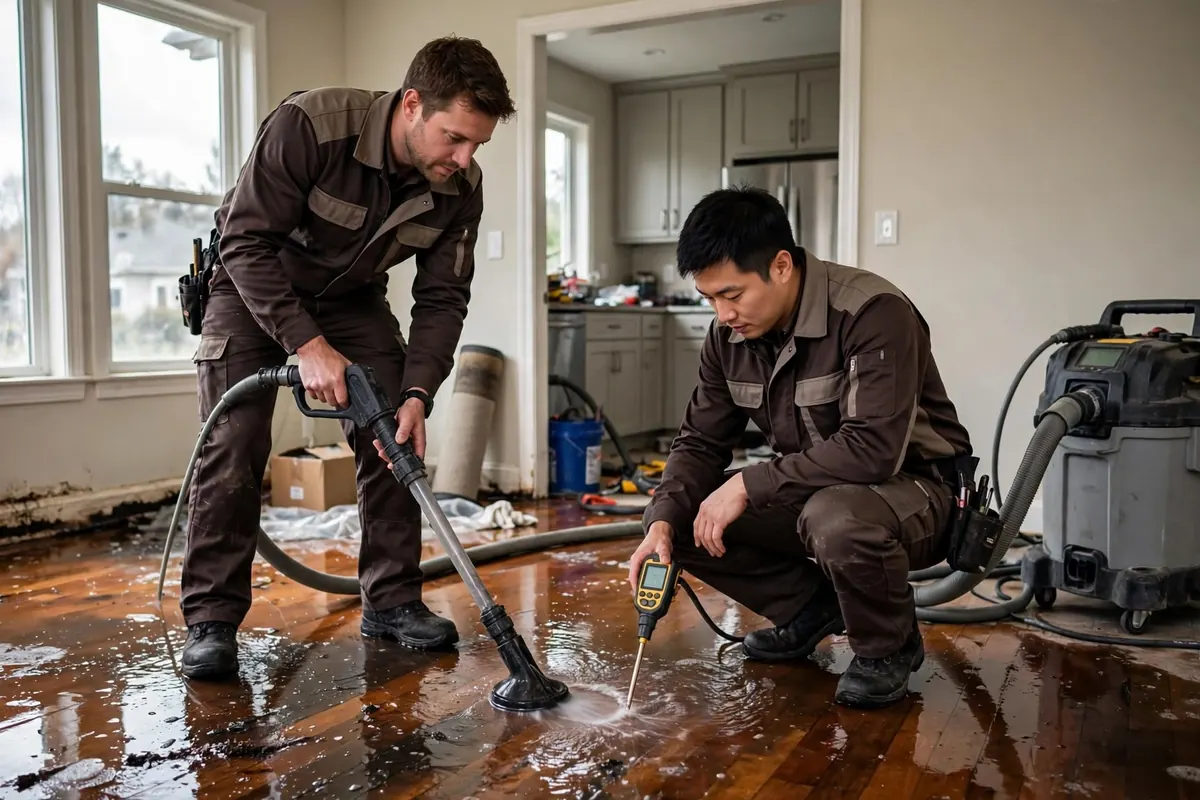
What to Do When Your Home Floods
Put safety first, then protect the evidence:
Stay out of the water
The university extension flood guide ranks electrical safety first and advises assuming that floodwater and anything it soaked is contaminated.
Wait to re-enter until it is safe,
and follow any evacuation instruction from authorities.
Steer clear of electrical items
that are wet or sitting in water.
Photograph and video the damage
once it is safe, before anything is thrown out.
Keep samples
of flood-damaged items such as carpet, flooring, and curtains, which FEMA's FloodSmart (opens in a new tab) advises for your adjuster.
Call your insurance agent,
since flood is handled differently from other water damage.
Contact us about the cleanup
Tell us what the water reached and how high it got.
What Flood Damage Restoration Includes
Restoring a flooded property in Littleton, CO takes more than pumping water out, and flood damage restoration typically includes:
- Assessing every area the floodwater reached, including how high it rose
- Extracting floodwater and removing mud, silt, and debris
- Removing soaked carpet, padding, drywall, and insulation that cannot be cleaned
- Washing and disinfecting the surfaces the water touched
- Drying the structure and confirming it with moisture readings
- Treating odor and preparing the space for repairs
Water removal is water extraction and removal, and drying is structural drying and dehumidification.
Flood Damage vs. Water Damage: What Is the Difference?
A flood is water entering a building from outside, such as storm runoff or an overflowing creek, while water damage usually describes water that starts inside, such as a burst pipe or a failed appliance. The difference matters for two reasons: floodwater is treated as contaminated, and insurance treats the two differently. FloodSmart notes, for example, that a National Flood Insurance Program policy does not cover water entering a home from the top down, so a roof leak is not handled as a flood.
Flood Water Categories and What Can Be Saved
Clean Water From Rain or a Broken Supply Line
Water that starts out clean, such as rain through a roof or a burst line, is the easiest case. The EPA's guidance for clean water damage allows some materials, such as carpet and finished wood, to be saved if they are dried within 24 to 48 hours.
Gray Water From Appliances or Seepage
Water from a washing machine, dishwasher, or seepage may carry some contamination, so more of what it soaked is cleaned or replaced, and time matters more.
Black Water From Sewage or Storm Flooding
Floodwater from outside the building is treated as contaminated. The extension guide advises replacing flooded carpet and discarding flooded drywall and wet fibrous insulation, and Boulder County's flood guidance warns that floodwater may carry sewage, industrial waste, and bacteria. When sewage is involved, the work is sewage cleanup.
What Gets Wet After a Flood
Floodwater reaches more than the floor. Expect it to affect:
- Carpet and padding
- Drywall and insulation in the lower walls
- Hardwood and laminate flooring
- Cabinet bases, baseboards, and trim
- Appliances and electrical equipment
- Stored belongings and furniture
- Ductwork, if water reached it
Why Flooding Happens in Littleton
The South Platte and Its Creeks
Littleton's flood history follows the South Platte River and its tributary creeks. The city's flood insurance study shows Littleton adopted a floodplain zone in 1971 that overlays its other zoning, and minor improvements were later made on Slaughterhouse Gulch and Little's Creek to limit damage from more frequent floods.
Rare Floods Are More Likely Over Time
The study explains that FEMA uses floods expected once on average every 10, 50, 100, or 500 years for floodplain management, and notes that the risk of a rare flood increases (opens in a new tab) when periods longer than a year are considered.
Storm Water on Streets and Private Property
When storm water overwhelms drains and creeks, it can spread over streets and yards, and basements and low rooms are often the first places it reaches.
Is Your Property in a Floodplain?
The City of Littleton provides a floodplain map (opens in a new tab) so you can check whether a property is in a FEMA or local floodplain. The city says local floodplains are not mapped by FEMA but are regulated the same way, and that they show on its zoning map as "FP-O." The city also requires a floodplain development permit for any proposed development in a floodplain, and its floodplain permit page (opens in a new tab) says its regulations can be more stringent than FEMA's. If your property is in a floodplain, ask the city whether planned repairs need a permit before work begins.
How Flood Damage Restoration Works
Assess and Protect
Work opens with a hazard check and a measurement of how far the floodwater reached, with attention to anything electrical in or near the water.
Remove the Water, Mud, and Debris
Standing water is extracted, and mud, silt, and debris are removed, so the contamination stops spreading through the building.
Dry and Disinfect
Surfaces are washed and disinfected, since Boulder County's guidance calls for thorough cleaning and disinfecting of anything contamination touched, and the structure is dried until moisture readings confirm it.
Prepare for Repairs
Once the building is dry and clean, it is ready for the trades that handle repairs.
Why Flooded Basements and Crawl Spaces Take Longer to Dry
The state's homeowner cleanup bulletin says an enclosed space like a basement or crawl space can take several weeks to dry out, and that microorganisms keep growing while humidity stays high. For that reason, a flooded lower level is not finished when the water is gone. It is finished when moisture readings show the structure is dry.
Protective Gear and Hygiene During Flood Cleanup
The state bulletin lists waterproof boots, gloves, eye protection, and washable or disposable clothing for contaminated-water cleanup, along with a dust mask against airborne microorganisms. Boulder County advises respiratory protection, especially once materials have dried. FloodSmart advises throwing away perishable food and other health risks after you have documented them.
What Not to Do After a Flood
A few common reactions add risk:
- Do not wade through floodwater, which can contain sewage and other contaminants.
- Do not turn on flooded electrical equipment until it has been checked.
- Do not discard damaged belongings before documenting them. FloodSmart advises photos, videos, and samples first.
- Do not let wet materials sit. EPA guidance is to dry wet materials within a day or two, because mold can start in that time.
Does Insurance Cover Flood Damage?
Usually only with a separate flood policy. Texas A&M's Real Estate Research Center explains that flood is excluded from standard homeowners policies, and FloodSmart explains that a National Flood Insurance Program policy covers physical damage directly caused by a flood. The Louisiana Department of Insurance, in a notice about FEMA claims, notes that a flood policy typically has a 30-day waiting period before it takes effect and that claims require a Proof of Loss, which has a 60-day deadline. Ask your insurer exactly what your policy requires.
Mold After a Flood
Standard NFIP policies do not cover mold damage, according to FloodSmart, so preventing it matters. Drying early, discarding materials that cannot be dried, and cleaning surfaces all help, and if mold has already appeared, mold remediation takes it on.
What Affects the Scope of Flood Damage Restoration
Scope follows how high the water rose, how long it stayed, whether it was contaminated, the number of rooms and floors reached, and what the floors, walls, and contents are made of. Pricing comes after an assessment, so none is listed here.
Flood Damage Restoration Service Areas in Littleton, CO
Flood response reaches these parts of Littleton, Colorado:
- Ketring Park
- Downtown Littleton
- Goddard
- Progress Park
- Southwest Littleton
ZIP codes 80123 and 80127 are included, along with the Littleton ZIP codes next to them. Questions about your address? Put it in your message and we will look.
Get Help After a Flood
Tell Us What the Flood Reached
When floodwater is inside a home or business, treat it as an emergency and get in touch now. Tell us the water height and the rooms affected, and we will explain what comes first.
Information That Helps Us Scope the Flood Work
Useful details: where the water came from, whether sewage could be involved, how long it has been inside, and whether there is a basement. Photos help when taking them is safe.
Write to Us About the Flood
Send contact@waterdamagerestorationlittleton.us your name, phone number, the property address, and what the flood reached, and the next steps will arrive in reply.