
Emergency Water Damage in Littleton, CO
Emergency water damage in Littleton, CO is water that is still spreading or has already soaked into a building, whether the cause is a split pipe, an appliance that gave out, a sewage backup, or storm water. The goal of an emergency response is to stop the spread, remove the water, and start drying before the damage reaches deeper materials. This page covers what to do in the first minutes, which water problems count as emergencies, and how an emergency water damage response works.
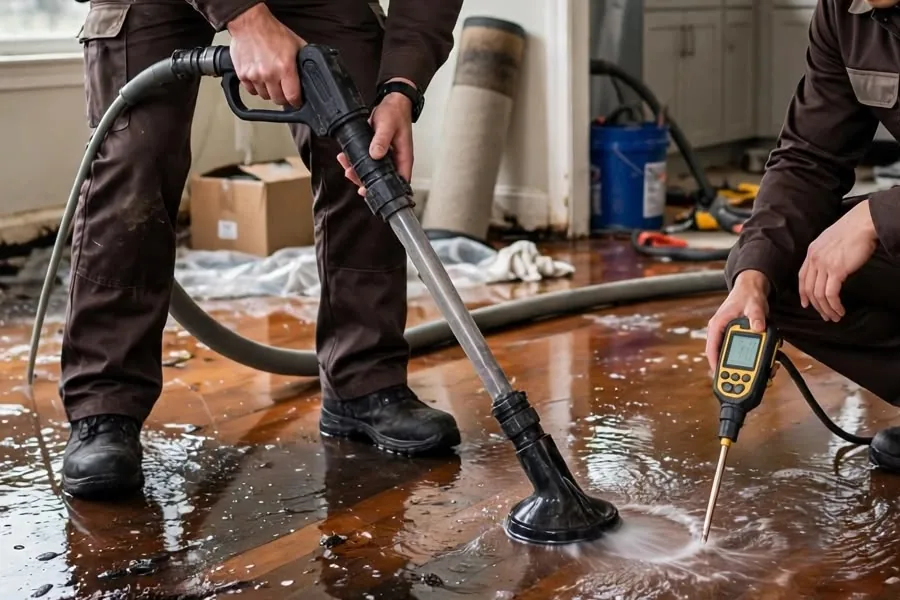
What to Do in the First Few Minutes
If you are facing a water damage emergency and wondering what to do first, work through these steps in order:
Get clear of electrical hazards
If water is near outlets, appliances, or the electrical panel, stay out of it. The university extension flood guide puts electrical safety first whenever water gets into a building.
Stop the water
Turn off the valve at the leaking fixture, or close the main shut-off valve. Denver Water says the main shut-off is commonly where the main pipe enters the foundation, often near an outside faucet.
Turn off power to the wet area only if you can reach the breaker safely
If reaching it means stepping in water, leave it and ask an electrician or your utility for help.
Lift valuables and furniture
Move electronics, papers, and small items to dry surfaces.
Take photos and notes
They support an insurance claim.
Contact us
Describe the scene, and we will say what to do while you wait.
What Counts as a Water Damage Emergency?
A water damage emergency is any situation where water is still flowing, cannot be stopped, or involves sewage or an electrical hazard. Treat it as an emergency when you see:
- Water still pouring from a broken pipe, hose, or fixture
- Sewage or toilet overflow coming into the home
- Water near the electrical panel, outlets, or appliances
- A ceiling that sags, bulges, or drips
- A basement taking on water
- Storm or flash flood water inside the building
- Standing water that has spread through several rooms
Slow leaks and small spills are less urgent, but they still need to be dried, because moisture left in walls and floors keeps causing damage.
What Not to Do During a Water Emergency
A few common reactions make a water emergency worse:
- Do not touch electrical equipment while it is wet or while you are standing in water.
- Do not wade through sewage or floodwater. The extension guide advises treating floodwater and anything it soaked as contaminated.
- Do not thaw a frozen pipe with an open flame. Plumbers advise against it.
- Do not wait to see whether it dries on its own. Moisture left in walls and floors keeps doing damage.
- Do not discard damaged items until you have photographed them. The photos document the loss for your claim.
Common Water Emergencies in Littleton Homes and Businesses
Burst and Frozen Pipes
A pipe that froze may not leak until it thaws, and that is when water floods the wall cavity, ceiling, or floor below. Stopping the flow comes first; after that, burst pipe water damage service deals with everything the water reached.
Water Heater Failures
A failed water heater can release a full tank into a utility room, garage, or basement. If you can reach the controls safely, turn off the power or gas to the unit before dealing with the water.
Appliance and Washer Leaks
Supply hoses and drain lines on washing machines, dishwashers, and refrigerator ice makers can fail without warning and soak flooring and the walls beside them.
Sewage and Toilet Overflows
Sewage is contaminated, so no one should wade through it, and every surface it touched needs sanitizing. That work falls under sewage cleanup.
Basement Flooding
Rain, snowmelt, or a stalled sump pump can spread water across a basement floor, where it soaks drywall and stored belongings. Basement water damage calls for removing the water, then drying the space thoroughly.
Storm and Roof Leak Water
When rain or melting snow gets through a roof, it soaks attic insulation and ceilings, and storm water can also push in around doors and windows.
Air Conditioner Condensate Leaks
A clogged condensate line can overflow and soak the ceiling or floor near the unit, often out of sight until a stain appears.
Standing Water Anywhere
Standing water in any room keeps soaking in, so water extraction and removal is usually the first step of an emergency response.
How an Emergency Water Damage Response Works
An emergency response follows one sequence, whatever caused the water:
Describe the Situation
We start by asking where the water is, whether it has been shut off, and whether sewage or an electrical hazard is in play, so the response fits the situation in front of us.
Stop the Spread and Remove the Water
The first priority is containing the damage and removing standing water, so it stops moving into walls, floors, and belongings.
Dry and Clean Up
With the water out, drying begins, moisture readings show when each material has dried, and the surfaces the water reached are cleaned.
Why the First 48 Hours Matter
The EPA (opens in a new tab) recommends getting wet materials dry within 24 to 48 hours, because mold can begin to grow in that window, and the extension flood guide says water-logged carpets and pads should come out within 48 hours after flooding subsides. That is why emergency water damage work focuses first on getting the water out and drying under way.
Does Insurance Cover Emergency Water Damage?
It depends on your policy and on what caused the water. Texas A&M's Real Estate Research Center (opens in a new tab) explains that standard homeowners policies cover water damage that is sudden and accidental, for instance from a split pipe or an appliance that fails, while flood is excluded and needs a separate flood policy. Sewer and drain backups are usually excluded unless an endorsement was added, and the City of Littleton says sewer backup coverage (opens in a new tab) can typically be bought as a separate product. Ask your insurer what it requires after a loss, and keep photos, notes, and receipts.
Water Emergencies in Littleton: Who to Contact First
Water Supply Problems: Denver Water or You
Denver Water repairs leaks on its meters and mains, but property owners are responsible for the service line that runs from the main into the home. The utility also says it is not responsible for water damage caused by a property's service line or internal plumbing.
Sewer Backups: The City or a Plumber
Within the City of Littleton, the property owner owns the sewer service line, and city utility crews are not allowed to clear a blockage in it. If the blockage is in your line, a plumber or sewer contractor has to clear it, and cleanup of the water is a separate job.
How to Reduce Your Risk of a Water Emergency
Three habits lower the odds of a water emergency:
- Know where your main shut-off valve is. Denver Water says to have one installed by a licensed and bonded plumber if you do not have one.
- Protect pipes before a cold snap. Foam insulation on pipes near exterior walls, and cabinet doors left open so heat reaches the pipes, are common precautions.
- Check hoses and connections. Look at washing machine, dishwasher, and water heater connections for cracks, bulges, or drips.
Emergency Water Damage Service Areas in Littleton, CO
Emergency water damage services reach these areas of Littleton, Colorado:
- Centennial
- Progress Park
- South Littleton
- Southwest Littleton
- Trailmark
Emergency service covers ZIP codes 80123 and 80128, plus the Littleton ZIP codes nearby. Is your street covered? Add it to your message and we will check.
Reach Us Now About Your Water Emergency
Tell Us What Is Happening
When water is spreading through your home or business, this is an emergency, so get in touch now. Tell us where the water is and what set it off, and we will explain the next move.
Information That Helps Us Respond
It helps to know whether the source is shut off, whether sewage is a possibility, how many rooms are wet, and if the building is a home or a business. A few photos help when they can be taken without risk.
Send a Message Instead
Prefer email? Write to contact@waterdamagerestorationlittleton.us and include your name, phone number, the property address, and a few details about what happened, and the next steps will come back to you.