
Water Heater Leak Cleanup in Littleton, CO
In Littleton, CO, water heater leak cleanup means removing the water a leaking or ruptured tank has released, then drying and cleaning the floor, walls, and belongings it soaked. A residential storage tank can hold tens of gallons, so a failure can flood a utility room, garage, closet, or basement before anyone notices. Below: the first steps to take, where the water tends to go, and how the cleanup works, with the heater itself repaired or replaced by a plumber.
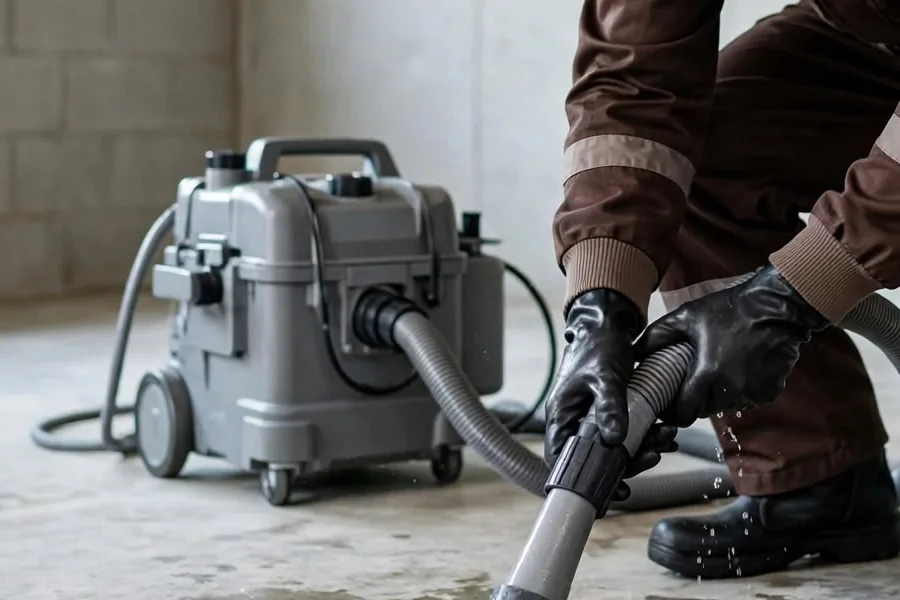
What to Do When Your Water Heater Leaks
With a leaking water heater, take these steps in order:
Turn off power to the heater
Flip the circuit breaker only when the panel is reachable from dry ground. On a gas heater, turn the gas control to off; if gas is in the air, get everyone outside and call your gas utility or 911 from there.
Close the cold water inlet valve
On most tank heaters the cold water shut-off valve sits on the pipe at the top of the unit and closes by turning it clockwise.
Shut off the main valve if the inlet valve will not turn
Denver Water (opens in a new tab) points out that the main shut-off usually sits where the main water line enters the foundation, frequently close to an outside faucet.
Be careful of the water itself
It can be hot enough to scald, and it may be near electrical connections.
Lift belongings out of the water
and take photos of everything wet.
Split the work
A plumber deals with the heater; we deal with the wet building.
What Water Heater Leak Cleanup Includes
Water heater leak cleanup in Littleton, CO addresses the whole wet footprint, not just the puddle. A typical job includes:
- Finding all wet areas around and beyond the heater
- Extracting standing water from the floor and low spots
- Drying the floor, wall bases, and subfloor, with readings to confirm the result
- Separating soaked materials and stored items worth keeping from those that are ruined
- Cleaning the surfaces the water touched and treating odor
- Preparing the space for the plumber and for any repairs
Water removal draws on water extraction and removal, and drying draws on structural drying and dehumidification.
Where a Leaking Water Heater Does Its Damage
Garages and Utility Rooms
A heater in a garage or utility room usually sits on a concrete slab, so water spreads across the floor and under walls into the rooms beside it, soaking stored boxes along the way.
Closets and Interior Rooms
A heater inside a closet or hallway alcove puts water straight into drywall, baseboards, and flooring, and the water can travel under the door into the next room.
Basements and Below-Grade Rooms
In a basement, a failed tank adds water to a space that is already hard to dry, and the job overlaps with basement water damage.
How Water Heater Leak Cleanup Works
Extract the Water
Standing water is removed first, starting where it is deepest, so it stops soaking into the floor and the base of the walls.
Dry the Area Around the Heater
Equipment keeps air moving and pulls humidity out of it, letting the slab or subfloor and the wall bases give up their moisture, with readings marking when each is dry.
Clean and Check the Space
The surfaces that got wet are washed, odors are dealt with, and the space is checked for moisture that traveled past the obvious wet spot.
Hand Off to the Plumber
Once the area is dry, the heater can be repaired or replaced without new damage hiding underneath.
What Happens to Stored Items and Flooring Near a Water Heater
Heaters are often surrounded by whatever does not fit elsewhere. Cardboard boxes, paper, and fabric soak up water and rarely recover, and carpet and padding beside a heater can stay wet underneath while the top feels only damp. The EPA advises drying carpet within 24 to 48 hours, and that is easier when the area is cleared and the water is extracted promptly. Photograph ruined items before discarding them.
Signs of a Water Heater Leak
Look for these signs around the heater:
- Water or sediment on the floor at the base of the tank
- Rust streaks or corrosion on the tank or fittings
- Rusty or discolored hot water at the faucets
- Dripping from the discharge pipe of the relief valve
- Damp drywall, baseboards, or flooring near the heater
- A musty smell in the closet, garage, or utility room
Sediment or water on the floor can signal corrosion, and rusty water can mean the tank is rusting inside.
Why Water Heaters Fail
The same article reports that the typical lifespan of a storage water heater is 10 to 15 years, according to the U.S. Department of Energy. Corrosion is a common end for a steel tank, and many tanks contain an anode rod that helps protect the steel but wears away over time. Lennox adds that high water pressure and a faulty temperature and pressure relief valve can also cause leaks, and that water dripping from the relief valve discharge pipe can mean the valve is doing its job or needs replacing. A plumber can tell which it is. Leaks at the supply connections above the heater are plumbing failures and fall under burst pipe water damage.
Water Heater Leak or Normal Drip: How to Tell
Not every wet spot means the tank is failing. A drip from the relief valve discharge pipe can mean the valve is doing its job or needs replacing, and moisture at a fitting may be a loose connection. Water coming from the body of the tank usually means it has corroded through and the heater needs replacing. Because the safe answer depends on which part is leaking, have a plumber look at any heater that leaves water on the floor.
What Not to Do After a Water Heater Leaks
A few common reactions make things worse:
- Do not touch electrical connections while standing in water.
- Do not restart the heater until a plumber has checked it.
- Do not ignore a slow drip. A small leak at the base often means the tank is failing.
- Do not throw away ruined items until you have photographs of them.
How to Reduce the Risk of a Water Heater Failure
Simple habits that reduce the chance of a water heater flood:
- Check its age. The serial number on the sticker or plate shows when it was made, and the U.S. Department of Energy puts the typical life of a storage water heater at 10 to 15 years, so plan a replacement once yours is older than that.
- Look for early warnings, such as rust, sediment, rusty hot water, or moisture at the base.
- Know where the cold water inlet valve is, along with the main shut-off.
- Keep belongings off the floor around the heater.
Does Insurance Cover Water Heater Leak Damage?
It depends on how the leak happened. Texas A&M's Real Estate Research Center (opens in a new tab) explains that covered water damage must generally be sudden and accidental, which is why a slow, long-running leak may be treated differently than a sudden rupture. Denver Water also notes it bears no responsibility for water damage (opens in a new tab) from plumbing inside a property or on its service line. Find out from your insurer what a claim needs, and set aside photos, notes, and receipts.
What Affects the Scope of Water Heater Leak Cleanup
Scope depends on how much water was released, how long it ran, where the heater sits, and what the floors and walls are made of. A leak in an unfinished garage is simpler than one in a finished basement with carpet and drywall. An assessment comes before any quote, which is why prices are not listed.
Water Heater Leak Cleanup Service Areas in Littleton, CO
Water heater leak cleanup reaches these parts of Littleton, Colorado:
- Sterne Park
- Goddard
- South Littleton
- Southwest Littleton
- Progress Park
Coverage includes ZIP codes 80123 and 80129 and the neighboring Littleton ZIP codes. Wondering whether your street qualifies? Add it to your note and we will look.
Get Help With a Water Heater Leak
Tell Us About the Leak
When a water heater has flooded the floor, this is an emergency, so reach out now. Tell us where the heater sits and what the water has reached, and we will say what to do next.
What We Need to Know About the Leak
Useful to know: the heater's location, whether the water supply is closed, how long it has leaked, and whether the room has finished floors and walls. Photos are welcome when taking them poses no risk.
Write to Us About the Leak
Send contact@waterdamagerestorationlittleton.us your name, phone number, the property address, and a note on what you found at the heater, and the next steps will be sent back.